Handmade soap from Goa: small-batch, made to order
Most soap reaches you months after it was made. Here is what it means to make soap in small batches from a farm in Goa, what goes into each bar, and how to order.
Try the starter bundle
Four soaps, ₹1,000. SLS-free, made to order from Goa. Free shipping.
Most soap you buy in India was made months before you opened it.
Large-scale production means manufacturing, packaging, warehousing, distribution, and shelving all happen before the product reaches you. The gap between when the soap was made and when you use it can be six months or longer. That shelf life does not happen on its own. It takes preservatives, synthetic stabilisers, and ingredients chosen to hold up over time.
Small-batch soap does not need that. The batch is small enough that it moves from making to curing to your hands in weeks. No warehouse. No shelf. Made when ordered, shipped after curing.
This is the actual difference between handmade and commercial soap. Not a philosophy. A supply chain.
Healing Soil makes soap this way in Goa.
What is made here and what is sourced
The soap bases — glycerin, goat milk, or shea butter — come from a manufacturer we have worked with for years. We do not make the base ourselves. Base manufacturing is specialist work, and sourcing from a consistent, known supplier is the right call for safety and quality.
What we add to those bases is different.
The neem comes from our tree. The tulsi is from the garden. These are grown on the property, dried under Goa sun, and added by hand to each batch. When a bar is described as containing farm-grown neem, this is what that means: grown here, not bought from a botanical supplier.
Not every ingredient works this way. Some are sourced. But the ones described as farm-grown are genuinely that.
The Goa climate and curing
Goa is warm and humid for most of the year. For soap-making, this changes how things work.
Curing is the time a soap bar needs after it has been made — the process where it hardens, water content reduces, and the bar becomes stable. Humidity extends this. You cannot rush it. A bar cured too quickly is soft and breaks down faster.
In Goa, curing takes as long as it actually takes. This is built into our process by necessity, not by choice.
Made-to-order fits this well. We do not make a batch ahead of time and hold it in stock. When you order, we make. The bar that arrives has been cured for the right amount of time, not sitting in storage for additional months after curing was already done.
The seven to ten day window between order and dispatch is the making and curing time. Not a processing delay.
What is not in these soaps
Every bar is SLS-free. No sodium lauryl sulfate, no sodium laureth sulfate. No parabens. No synthetic fragrance.
SLS is the detergent that creates fast, dense lather in most commercial soap. It removes oils efficiently — which is also the problem. It removes more than dirt. It strips the oil layer your skin produces to protect itself. For people who bathe once or twice a day in a hot climate, the cumulative stripping adds up.
Removing SLS does not make a bar less effective at cleaning. It makes it less harsh. The lather is lighter than commercial soap. Skin feels clean after washing, not tight.
The soaps
Seventeen bars across three base tiers.
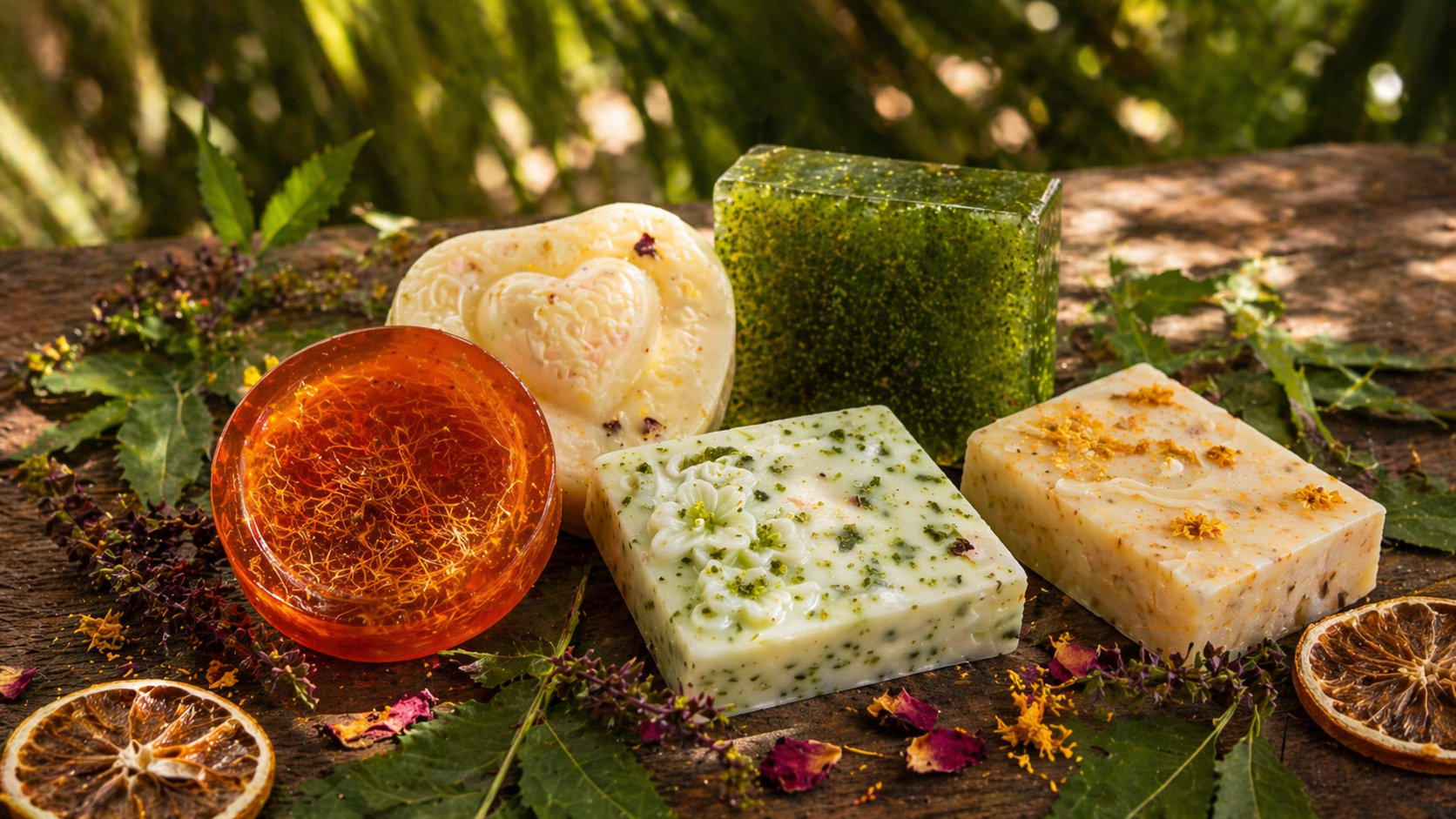
Glycerin (₹250). Glycerin is a byproduct of soap-making that commercial manufacturers typically remove because it is valuable to sell separately. In these bars, it stays in. Glycerin draws moisture into skin as you wash. The clean is gentle. Suits oily or combination skin.
Goat milk (₹350). Goat milk replaces water in the base. It contains lactic acid that gently lifts dead skin cells, natural fats that absorb easily, and vitamins. Skin feels nourished, not just clean. Suits sensitive, dry, or combination skin. The easiest base to start with if you are switching from commercial soap.
Shea butter (₹400). The richest of the three. Some of the shea butter survives the soap-making process intact and deposits on skin when you wash. The conditioning happens while you are washing. Suits very dry skin or anyone whose skin feels tight after showering.
Loofah soap (₹500) and a travel bar (₹50) are also available.
The context behind these soaps
Healing Soil started as a farm before it became a soap business. The growing came first — the composting, the attention to what goes into the soil, the practice of understanding what things are actually made of.
The soap grew out of that context. The same attention to ingredients that shapes how the land is managed shapes what goes into each bar. No synthetic pesticides in the soil. No synthetic detergents in the soap.
If you are curious about that context, our blog has years of writing from the farm — growing food, composting, observing what slow living actually looks like in practice.
Getting them to you
Everything ships pan-India. Seven to ten days from order to dispatch.
The starter bundle covers all three bases — glycerin, goat milk, and shea butter — plus a travel bar. One order, ₹1,000. A practical way to find out which base your skin responds to before committing to a full bar of each.
For a full guide to choosing between bases and what to look for in handmade soap, the complete handmade soap guide has the detail.
Written by Healing Soil
Try the starter bundle
Four soaps to find the one your skin agrees with. ₹1,000. SLS-free, made to order from Goa.
Shipped in 4 days. Free shipping included.
See the starter bundleWant the full picture? Read our complete guide to handmade soap in India.