Handmade soap delivered to Bangalore: made in Goa, ships in 7–10 days
Bangalore has specific conditions that make most commercial soap harder on skin than it needs to be. Here is what those conditions are, what to look for in a soap, and how Healing Soil ships from Goa.
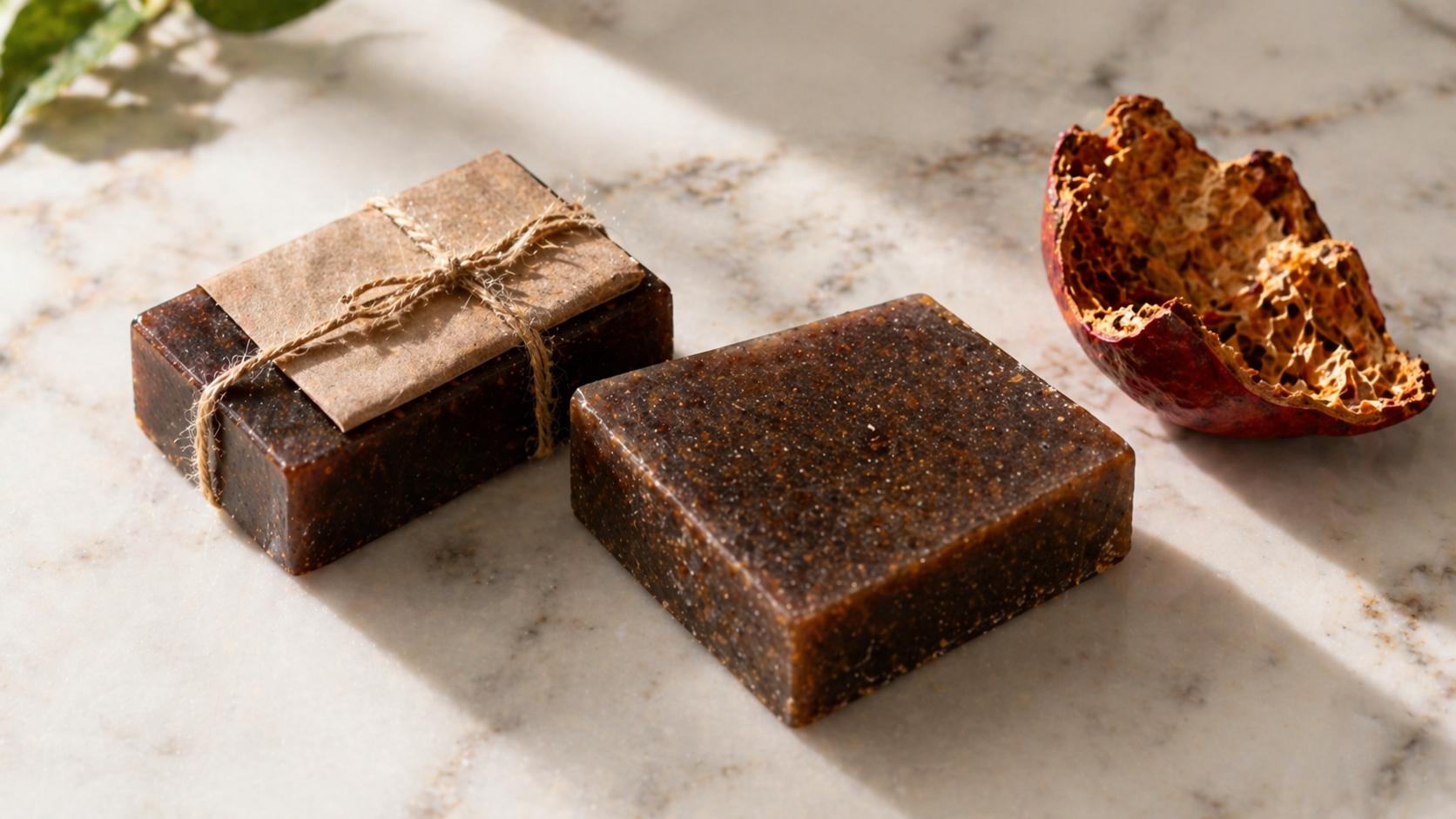
Try the starter bundle
Four soaps, ₹1,000. SLS-free, made to order from Goa. Free shipping.
Bangalore is a particular kind of place to have skin.
The water is hard. The air in most parts of the city carries more particulate matter than most people notice. The heat runs from mild to severe depending on the month. Most people bathe twice a day, sometimes more in summer.
Each of these on its own is manageable. Together, they add up. And the soap you use sits at the centre of how your skin handles all of them.
What Bangalore water does to skin
Hard water contains dissolved minerals — primarily calcium and magnesium. When water is hard, it reacts with soap to reduce lather, which leads most people to use more soap to feel clean. As the water dries on skin, those minerals leave a film that can feel tight or dry.
Bangalore's water supply varies by area, but the zones served by KRS reservoir water tend toward moderate to high hardness. Areas on borewells often have harder water still.
Commercial soap already strips skin oils as part of how it works. The detergents in the formula — usually sodium lauryl sulfate — remove oils efficiently. Add hard water to that and the dryness compounds. Many people in Bangalore dealing with persistent skin dryness have never connected the water and soap combination as a cause.
What switching soap actually changes
Most commercial soap contains SLS. It is what creates the dense, fast lather you are used to. It also strips your skin's natural oil layer every time you wash.
Your skin produces those oils to protect itself. When they are stripped, skin works to rebuild them. If you are washing twice a day with SLS-heavy soap, the cycle does not resolve.
Switching to an SLS-free soap changes the baseline. The stripping stops. Skin is allowed to maintain its own protective layer between washes. For many people, the tightness after washing reduces within the first week. The underlying dryness usually takes two to three weeks to improve as skin's balance normalises.
Hard water still deposits minerals. But without the compounding effect of SLS, skin handles it better.
What to look for in handmade soap
Not all handmade soap is genuinely different from commercial soap. The label tells you.
Look at the ingredient list. If SLS or SLES appear near the top — sodium lauryl sulfate, sodium laureth sulfate — the soap still uses the same detergents. Also look for "fragrance" or "parfum" without further detail, which usually means synthetic fragrance. Synthetic fragrance is a common source of reactions for people with sensitive skin.
A bar without SLS, SLES, parabens, or synthetic fragrance is genuinely different from most commercial soap — regardless of what word appears on the front of the packaging.
For a full guide to reading soap labels, the SLS-free soap guide covers it in detail.
About Healing Soil
Healing Soil makes handmade soap from a farm in Goa. The soap bases — glycerin, goat milk, shea butter — are sourced from a manufacturer we have worked with consistently. The neem and tulsi added to some of the bars are farm-grown: from our tree and our garden in Goa, dried under the sun, added by hand to each batch.
The connection to Bangalore is not incidental. This business grew from people who spent years in the city, felt the pull of a slower life, and moved to Goa to build the farm and, eventually, the soap. The story of why that happened is on the site if you are curious.
The soap is made there now. It ships here.
The soaps
Three base tiers, seventeen bars in total.
Glycerin soaps (₹250). Clear bars. Glycerin is a soap-making byproduct that commercial manufacturers remove and sell separately. In these bars, it stays in — it draws moisture into skin as you wash. The lather is light, the clean is gentle. Suits oily or combination skin.
Goat milk soaps (₹350). Goat milk replaces water in the base. Natural fats absorb easily. Vitamins in their naturally occurring form. The lather is creamy and skin feels nourished after washing. Suits sensitive, dry, or combination skin. The most versatile base — a good starting point if you are not sure which to choose.
Shea butter soaps (₹400). The richest option. Some of the shea butter survives the soap-making process and deposits on skin when you wash. Conditioning happens at the moment of washing. Suits very dry skin or skin that feels tight in the dry months.
No SLS in any of them. No parabens. No synthetic fragrance.
Delivery to Bangalore
Everything ships pan-India. Seven to ten days from order to dispatch — the making and curing window, not a processing delay. Delivery to Bangalore typically adds one to two days after dispatch.
The starter bundle is the most practical place to start: glycerin, goat milk, and shea butter bars, plus a travel size, for ₹1,000. One order to find out which base suits your skin before committing to a full bar of each.
For a full breakdown of how to choose between bases, the handmade soap guide has the detail.
Written by Healing Soil
Try the starter bundle
Four soaps to find the one your skin agrees with. ₹1,000. SLS-free, made to order from Goa.
Shipped in 4 days. Free shipping included.
See the starter bundleWant the full picture? Read our complete guide to handmade soap in India.